Who should apply?
SPIN: Explore is open to researchers at every stage of their career, including PhD candidates, postdoctoral fellows, and senior researchers. The programme is designed for those whose work holds potential beyond the academic context and who want to understand what that means commercially. Applications are welcomed from all disciplines and research backgrounds. No prior experience in business, entrepreneurship, or industry engagement is required.
What is SPIN: Explore?
SPIN: Explore is a 9-hour online programme that helps researchers see their work from a broader perspective. Through six live online sessions, participants explore application pathways, technology transfer, and science communication. They leave with a practical framework to understand the problem their research addresses, articulate the impact they want to create, and frame their solution clearly for audiences beyond academia.
What you will gain
By the end of the programme, you will have a clear framework to:
- understand the problem your research addresses
- clarify the impact you want to create
- frame your solution in a way that resonates beyond academia
- communicate its value to partners, stakeholders, funders, and wider audiences
Build a structured business concept and define your path towards SPIN: Rise.
A first step towards greater impact
SPIN: Explore helps you understand the problem you want to solve, the impact you want to create, and how your research can be framed beyond academia.
Unlock Your Potential
Commercialisation Awareness & Technology Transfer
Bridging Science and Business
Understand the full commercialisation pathway from discovery to market. Explain the role of a Technology Transfer Office. Apply the Innovation Readiness Level (IRL) framework to your own research. Identify one viable commercialisation pathway.
Tuesday, June 9, 2026
14:00-15:30 CEST
Learning Topics
- The Commercialisation Pathway: Understand the full journey from scientific discovery to market, and the key milestones that shape a researcher's route from the laboratory to real-world application.
- The Role of the Technology Transfer Office: Learn how TTOs support researchers throughout the commercialisation process and how to engage with them effectively at every stage.
- Applying the Innovation Readiness Level Framework: Discover how the IRL framework provides a structured approach to assessing and advancing the commercial potential of Deep Tech research.
Biography
Eva Sandström Halén is currently working as Business Development Coach at KTH Innovation and a KTH Alumni from Mechanical Engineering with a specialization towards Industrial Management.
Her extended milage of industrial experience includes working with consumer products, medical devices, and biotechnology. For more than two decades she has held management positions including being CEO for medium size Swedish subsidiaries of global brands such as Electrolux, Etac and Audika (part of the Demant Group).
Before joining KTH Innovation, she was CEO of the startup Ebba Biotech and in three years took the turnover fund basically zero to 200.00 Euro. Since 2020 she is active as industrialization advisor on the board of the Chalmers scale up Mimbly.
She likes to combine long term strategy with short term action and result and lives by the motto: ”Team is everything – it's the people we work with that makes every day a fun adventure.“
Find your Value
Apply the Lean Canvas Business Model and other business-building tools introduced by an expert practitioner. Understand how these models are used by scientists throughout the course. Begin mapping your research to commercial contexts and identify the problems.
Thursday, June 11, 2026
14:00-15:30 CEST
Learning Topics
- Introduction to the Lean Canvas Business Model: Learn how the Lean Canvas is applied in a science first context, guided by an experienced practitioner in Deep Tech commercialisation.
- Business Tools for Researchers: Explore practical business-building frameworks designed specifically for scientists at the earliest stages of commercialisation.
- Mapping Research to Commercial Contexts: Discover how to identify the problems your science is positioned to solve and begin shaping the foundations of a credible commercial case.
Biography
Steve Mullen is the founder of Sequoralab Consulting and creator of the Impact Innovation Canvas -- a front-end innovation framework designed to help deep-tech teams articulate and communicate their value before the business model conversation begins.
Delivering innovation workshops for Fraunhofer AHEAD and other impact-driven cohorts & accelerators across Europe, Steve works at the intersection of research commercialisation, innovation strategy and lab-to-market thinking. His MSc research, completed in 2026, examined how the Impact Innovation Canvas helps deep-tech teams structure and communicate how they capture value, for whom and why -- bridging the gap between scientific invention and commercialisation readiness, with statistically significant results.
From London, he is now based in Lima, Peru, and works with research institutes, accelerators and innovation programmes across the EU ecosystem.
Validate The Core
Problem-Solution Fit & Value Proposition
Find Your Problem Solution Fit
Diagnose pain points and user needs using structured problem-framing techniques. Distinguish scientific problems from market problems. Apply basic problem-diagnosis methods, including user interviews and needs mapping. Identify key user groups your research could serve.
Tuesday, June 16, 2026
14:00-15:30 CEST

Learning Topics
- Structured Problem Framing: Learn how to diagnose pain points and user needs using structured problem framing techniques adapted for research-based innovation.
- Scientific Problems and Market Problems: Understand the critical distinction between scientific challenges and market problems, and how to navigate both.
- User Research for Scientists: Explore how user interviews and needs mapping can be applied to validate assumptions and identify the key user groups your research can serve.
Biography
Stephan Botz is the co-founder of Gritd and one of the driving forces behind milestone-driven startup development in Europe. Having contributed to the launch of over 1,000 startups, Stephan brings a decade of experience in guiding founders toward product–market fit and investment readiness. He has contributed to the data-driven approach of venture building in Europe based on the analysis of over 3.500 startups. Helping reduce risk and accelerate growth in any stage of the startup lifecycle. Driven by the belief that Europe’s next wave of innovation will come from ventures built on real market demand, he continues to push venture development toward measurable impact.
Build Your Case
Engineer a clear value proposition using the Value Proposition Canvas. Differentiate technology features from user benefits. Identify the “jobs to be done” for your target users. Produce a one-paragraph value proposition and evaluate it against investor and Technology Transfer Office criteria.
Thursday, June 18, 2026
14:00-15:30 CEST
Learning Topics
- Engineering the Value Proposition: Learn how the Value Proposition Canvas is used to build a clear and credible value proposition rooted in research-based innovation.
- From Technology Features to User Benefits: Discover how to translate scientific capabilities into tangible benefits and articulate the jobs to be done for target users.
- Meeting Investor and TTO Expectations: Understand how to evaluate a value proposition against the criteria that matter most to investors and technology transfer offices.
Biography
Ritalba Lamendola has a dual background in science and business, holding a PhD in Chemistry and a DBA focused on business model design in deep-tech start-ups and scale-ups. She brings strong technical and scientific competences in materials science, with broad experience translating innovation into market-ready solutions across MedTech, Microelectronics, Photonics, CE sectors.10 years as a tenured professor and materials science researcher and 10 years in high-tech and chemical multinationals in global executive roles in product industrialization, as BU global marketing manager, and head of global healthcare business.
She is Expert at Innosuisse, Business Coach at EIC, for Accelerator, PathFinder, Transition, STEP instruments, Advisor and Mentor to C-Suite at EIC Scaling Club for HealthCare Group, Coach and Jury Member at TechTour, Venture Competition, MassChallenge, Mentor at Tech4Regen-EPFL Innovation Park, Expert at Solar Impulse Foundation.
She runs Eveura Sarl, a Switzerland based advisory firm in Business Model Design. to SMEs, Start-Ups and Scale-Ups in Healthcare, Chemicals, Optoelectronics, Microelectronics, CE, from early innovation through industrialization and commercialization.
She collaborates with Grenoble Ecole de Management on research on Business Model Design and Entrepreneurship in high-tech start-ups and with Journal of Business Models (Aalborg University, Denmark) as Member of the Editorial Board, she has a guest lecturer at Grenoble Ecole de Management, Speaker at International Conferences on Business Models.
Strategize For Impact
Market Strategy & Science Communication
Find Your Market
Identify and prioritise early adopters for your Deep Tech innovation. Apply market segmentation frameworks. Map the relevant ecosystem: industry partners, regulators, investors, and end users. Develop a hypothesis for your first market and a path to initial traction.
Tuesday, June 23, 2026
14:00-15:30 CEST
Learning Topics
- Identifying Early Adopters: Learn how to identify and prioritise early adopters for Deep Tech innovation and why they are critical to first traction.
- Market Segmentation for Deep Tech: Explore how market segmentation frameworks can be applied to research-based ventures to define a credible first-mover segment.
- Mapping the Innovation Ecosystem: Discover how to map the relevant ecosystem of industry partners, regulators, investors, and end users surrounding a Deep Tech innovation.
Biography
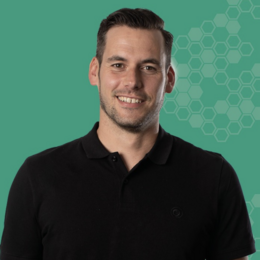
Manuel Hösle works as an investment and venture advisor at the intersection of deep tech research, venture building, and market adoption. He collaborates closely with researchers, and founders who are exploring how their work can create value beyond the lab.
In his work, Manuel helps teams make sense of this transition — whether they start with a strong technology looking for a market, or with an initial market opportunity that still needs the right technical shape. Drawing on his own startup experience and years of venture building work, he brings a practical, hands on perspective. What drives him is helping teams gain clarity: about who their solution is really for, why it matters, and how it can gain traction in the real world.

Art of Communicating Science
Translate complex science into clear, compelling narratives for non-scientific audiences. Apply science storytelling and communication techniques. Develop a strategy to engage stakeholders, funders, and industry partners beyond traditional academic communication.
Thursday, June 25, 2026
10:00–11:30 CEST
Learning Topics
- Storytelling for Scientists: Learn how to translate complex scientific work into compelling narratives that resonate with non-scientific audiences.
- Communicating Beyond Academia: Discover science communication techniques tailored for investors, industry partners, funders, and policy makers.
- Strategic Stakeholder Engagement:Explore how to develop a communication strategy that builds meaningful engagement with stakeholders across the Deep Tech ecosystem.
Biography
Dr. Mirko Bischofberger is an expert in science communication with more than 20 years of experience. He's a lecturer at EPFL, ETH Zurich, University of Basel and University of Zurich. Mirko studied molecular biology and specialised in computational biology during his PhD. After working for the Neue Zürcher Zeitung and the Swiss Parliament, he joined the SNSF and EPFL. He has won numerous communication grants and awards and works for several funding agencies such as the ERC, the SNSF and the FWF.
Timeline
| 5th June 2026 (5 PM CET) | 9th June 2026 | 25th June 2026 |
| Applications close* | Course starts | Course ends |
*Applications are reviewed on a rolling basis. Submit early to secure your place before the deadline.
Cost
SPIN: Explore is free to attend and open to researchers at any career stage. Places are limited, so submit your application early.
Selection will prioritise those applying from 28DIGITAL partner organisations, which are listed here.
If you are from a non-partner organisation, please select “Other organisation” in the application form.
For any questions about the application process, contact us at spin@28digital.eu.
Attendance & Certificate
Participants who complete the programme receive a certificate of participation as part of an EIT-labelled learning experience.
Sessions are live and interactive, attending at least five of the six keeps you on track for your certificate.
Applications for SPIN: Explore 2026 are now open. Secure your place before 5 June.
Apply now
FAQ
What are examples of Deep Tech innovations?
Deep Tech innovations are scientific or engineering solutions to complex global challenges. They often require lengthy research and development and large capital investment before successful commercialisation. Deep Tech sectors which are of particular interest to 28DIGITAL include:
- Artificial Intelligence and Machine Learning, including Big Data
- Communications and Networks, including 5G
- Cybersecurity and Data Protection
- Electronics and Photonics
- Internet of Things
- Virtual Reality, Augmented Reality
- Web 3.0, including Blockchain
- Robotics
- Automotive and Remote Sensing
- Semiconductors (microchips)
- Sustainable Energy, Clean Technologies and Maritime Systems
How do I access the course?
If your application is selected, you will receive precise information via email with the full calendar and how to access the online lessons.
Will I receive a certificate upon completion of the course?
Yes, we will issue an 28DIGITAL certificate for every individual enrolled in the course, should they comply with the required attendance rate.
What is the required attendance rate?
In order to fully benefit from the programme’s contents, participants cannot miss more than 1 Session.