According to the Baltic Deep Tech Report 2025, deep tech is no longer a niche - it's the core of the Baltic startup economy.
Deep tech is no longer niche
With 930 deep tech startups – having a total enterprise value of EUR 7.5 billion – deep tech is no longer a niche.
It's the core of the Baltic startup economy.
According to the Baltic Deep Tech Report, in 2025, deep tech's share of total startup funding was 49.5% – that's more than twice the 17.5% share recorded in 2021. More so, the enterprise value of Baltic deep tech has grown 2.8 times over the past five years, outpacing even the US in relative growth.
The Report goes on to note that the regionalisation of capital has important strategic implications for Estonia, Latvia and Lithuania. For instance, as the countries evolve toward a sovereign deep tech financing model, an increasing share of funding is coming from domestic and European investments. In fact, domestic investment in deep tech is up a staggering 238% over three years.
While the Baltic deep tech ecosystem remains early-stage-heavy, it is maturing into Series A/B depth, with many startups now entering the execution phase where real category leaders are established. According to the Report, nearly half of deep tech capital in the region is now in Series C (46%).
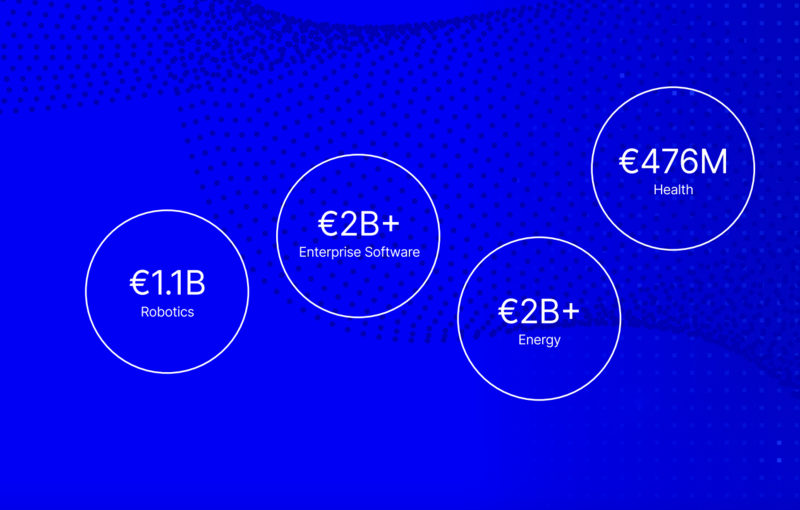
Another noteworthy finding is that deep tech value creation is highly concentrated in a few verticals, including robotics, enterprise software, energy and health. This indicates that the Baltics are forming deep specialisation clusters and not generalist ecosystems – a development that is a key characteristic of other successful deep tech regions.
Published by Startup Lithuania, Startup Estonia, Iron Wolf Capital and WALLESS, the Baltic Deep Tech Report 2025 showcases the continued growth and increasing international relevance of the Baltic deep tech ecosystem across Estonia, Latvia, and Lithuania.
The report additionally highlights several ecosystem-building initiatives contributing to cross-border collaboration and innovation development across the region, including FINEST SCALEUP.
Read the full report here.
Deep tech by the numbers
Deep tech accounts for 13.5% of all startups in Estonia, Latvia and Lithuania.
Best practices in deep tech commercialisation
Best Practice No. 4: Focus on industry-specific support
While initiatives such as incubators and acceleration programmes are essential in helping startups overcome barriers related to lack of experience, funding, and market access, the need for industry-specific support is becoming increasingly apparent.
According to startups, this type of support is particularly valuable because it not only facilitates networking but also helps them verify the specific market they plan to enter.
Every industry has its own unique challenges and regulations, and a deep understanding of these can be crucial to a young company’s success. As a result, targeted industry support significantly increases a startup’s shot at success – especially in sectors where legal and regulatory requirements are complex.
You can learn more about this topic via the FINEST SCALEUP Digital Platform. The platform is free and, once registered, you will have access to a wealth of best practices, exclusive interviews, our deal room database and much, much more.
Closing thoughts
“Lithuania is steadily advancing its technological capabilities, strengthening pathways from science to commercialisation, and playing a central role in positioning the Baltic Region as a competitive hub for high-complexity, deep tech innovation.”
– Karolina Urbonaitė, Head of Startup Lithuania at the Innovation Agency Lithuania