28DIGITAL and EPSI Sign Strategic MoU to Strengthen Sports Innovation and Inclusive Growth in Europe
28DIGITAL and EPSI (European Platform for Sport Innovation) have signed a Memorandum of…
Despite years of awareness campaigns and educational initiatives, women remain significantly underrepresented in digital careers and leadership positions across Europe. An EU-funded consortium is attempting to address the problem through a different approach: coordinated data collection and structured dialogue between Member States.
28DIGITAL is participating in Connecting Women in Digital, an initiative funded under the EU's DIGITAL Programme that brings together policymakers, researchers, and industry stakeholders. The consortium's premise is that fragmentation — of data, policy approaches, and collaboration between education systems, labour markets, and industry — has been a core obstacle to progress.

The initiative centres around a pan-European Forum that enables Member States, industry, academia, and civil society to analyse national strategies, identify gaps, and exchange practices. Rather than proposing isolated solutions, the focus is on systemic change, recognising that gender equality in the digital domain is shaped by education pathways, workplace cultures, policy incentives, and broader societal norms. Within the Forum, two thematic working groups are currently open: "ICT Education Path" and "Leadership empowerment", two others were established in December ("Reprogramming Skills: VET as a Catalyst for Women's Digital Transitions" and 'Intersectional Approaches") and more will be added soon.
On 14 November 2025, the consortium launched the Women in Digital Index at the Digital Skills EU Days summit in Brussels. The Index represents an attempt to measure gender equality in digital more comprehensively, tracking women's participation along the entire pipeline - from early STEM education and ICT training, through digital employment, and into leadership roles - while accounting for the enabling environment that influences these transitions.
Methodologically, the Index standardises indicators on a 0–100 scale and organises them into five weighted pillars: STEM, ICT, Digital Jobs, Leadership, and Enabling Environment. The data combines established sources such as PISA, Eurostat, and national statistics with insights from the Women in Digital Survey, which gathered responses from more than 4,400 ICT professionals across the EU.
28DIGITAL, which contributes expertise in digital policy, regulation, and stakeholder engagement to the initiative, views the Index as a shared evidence base intended to support smarter policymaking and more effective public–private collaboration.
The findings reveal a familiar pattern. While women's participation in STEM and ICT education is improving in many countries, this progress weakens further along the pipeline. In several Member States, women occupy fewer than 25% of senior digital leadership roles. Survey results point to persistent barriers, including the influence of gender norms, unequal workplace expectations, and limited access to leadership opportunities.
"The challenge is not a lack of talent, but a lack of systems that allow that talent to progress," said Federico Menna, CEO of 28DIGITAL. "By combining rigorous data with structured collaboration between policymakers, educators, and industry, this initiative gives Europe the tools it needs to move from good intentions to measurable impact."
In early 2026, the consortium will publish the State of Women in Digital Report, which will provide a detailed analysis and policy recommendations based on feedback from member states. For now, the Index serves as a shared evidence base to support policymaking, targeted investment, and public-private collaboration.
Receive the latest news and events updates by subscribing to our newsletter.
Are you a member of the media and would you like to contact us?
→ Get in touch with us here
 5 March 2026
28DIGITAL and EPSI (European Platform for Sport Innovation) have signed a Memorandum of…
 2 March 2026
Europe stands at a decisive moment in deep tech. It has the scientific base, engineering…
 20 February 2026
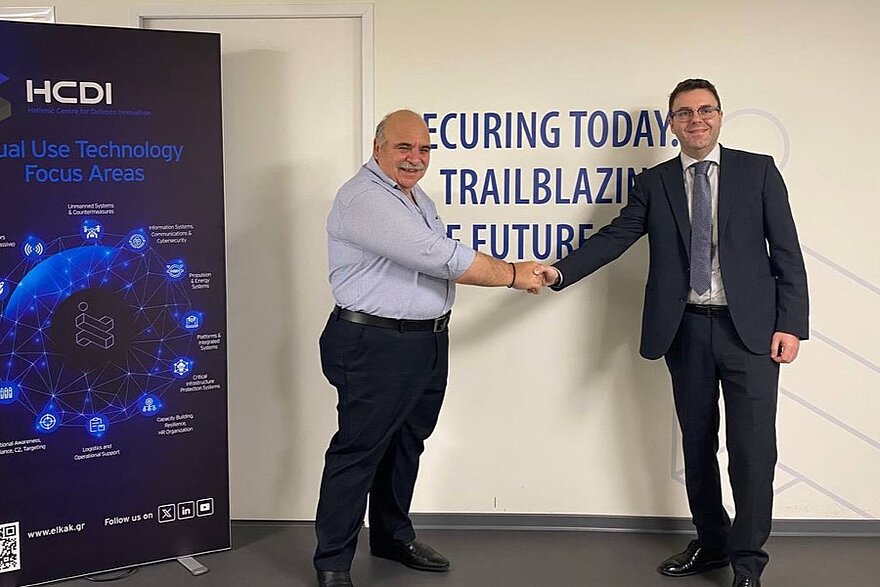
28DIGITAL and the Hellenic Centre for Defence Innovation (HCDI) have established a…
 13 February 2026
Europe stands at a defining moment in its pursuit of competitiveness and technological…
 11 February 2026
28DIGITAL, Europe's leading digital innovation and entrepreneurial education organization,…
 3 February 2026
The FINEX project, a Horizon Europe–funded initiative spanning Estonia, Latvia, Lithuania,…
Initiated by the EIT
